CK Solution Co., Ltd. is committed to eco-friendly practices and energy efficiency across diverse plant industries through design, construction, and equipment manufacturing.
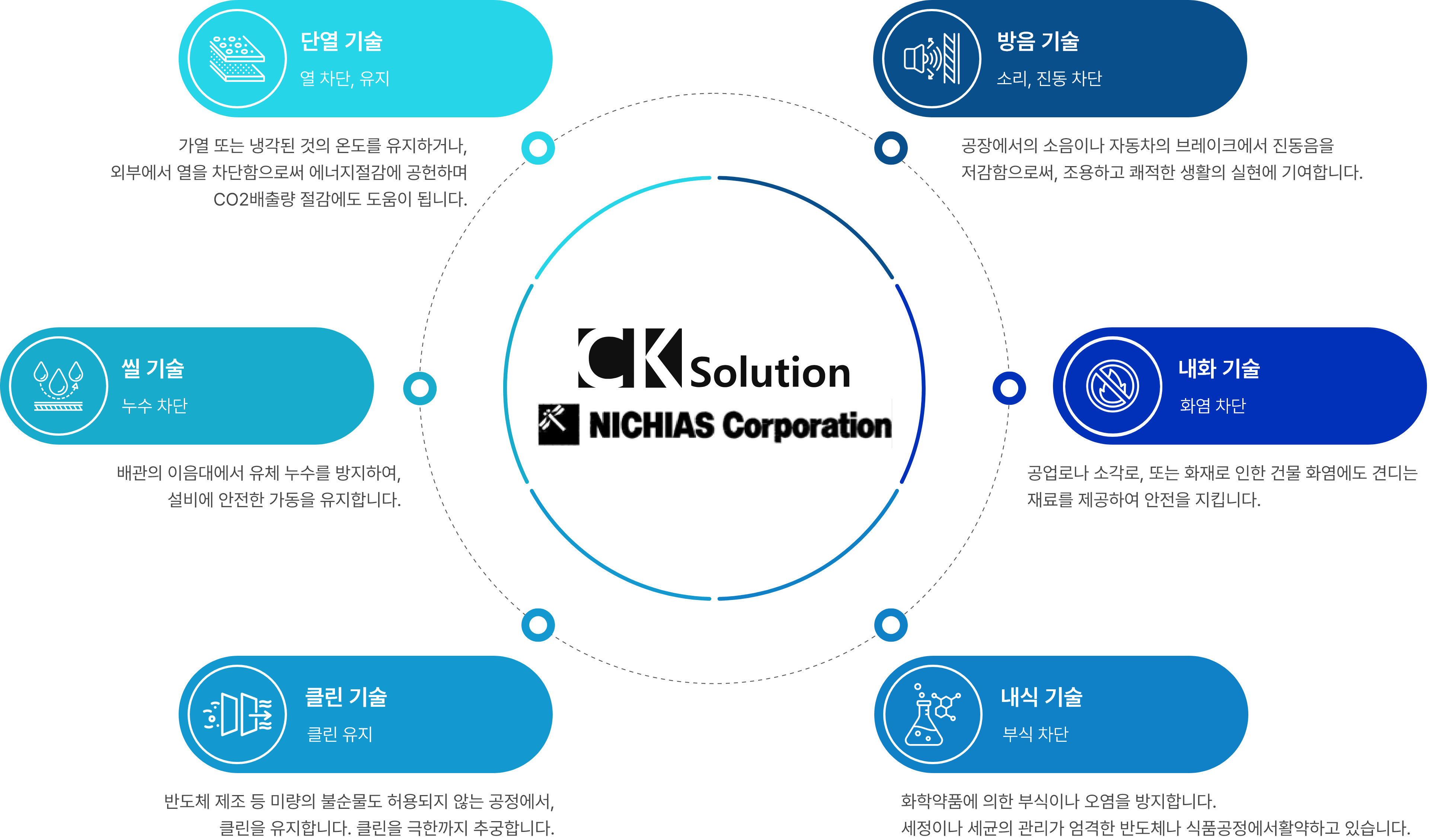
In particular, the dehumidification rotors used in our dehumidification equipment are produced through ongoing collaboration with Nichias Corporation of Japan.
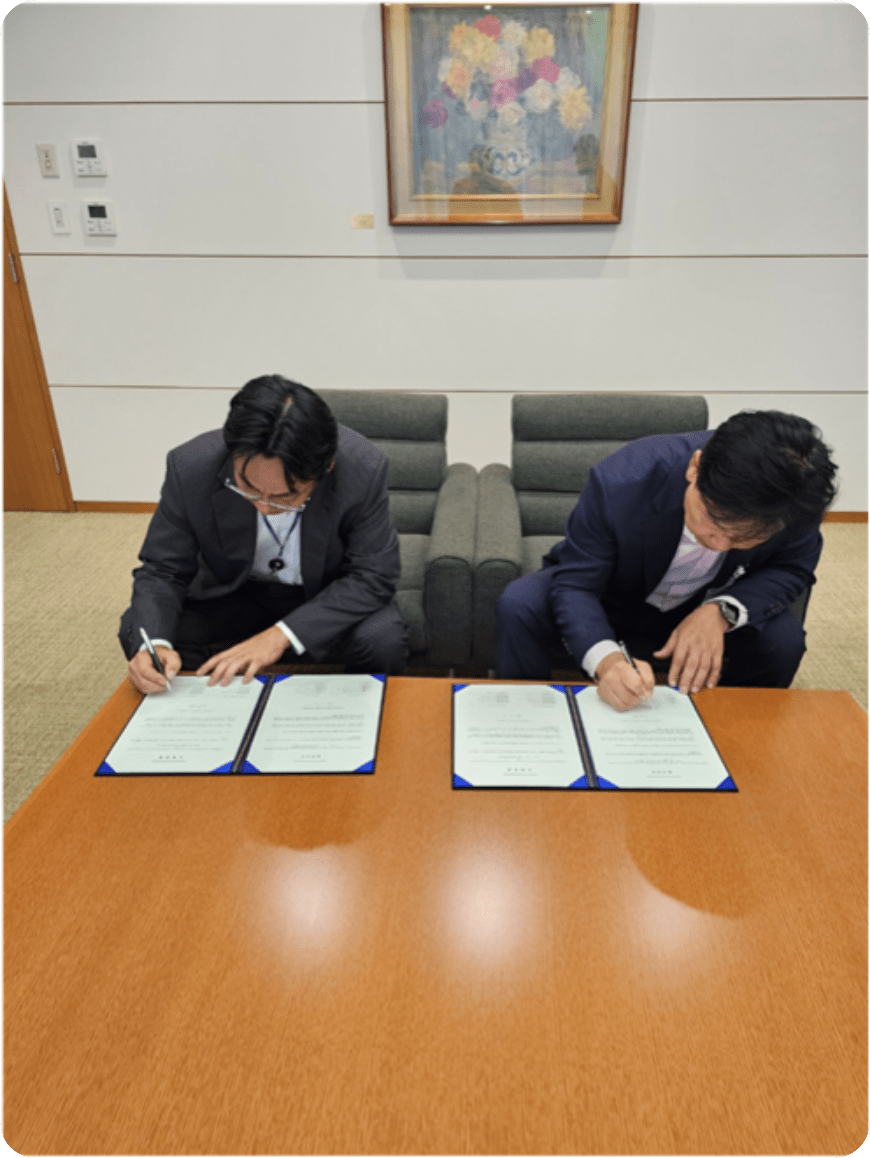
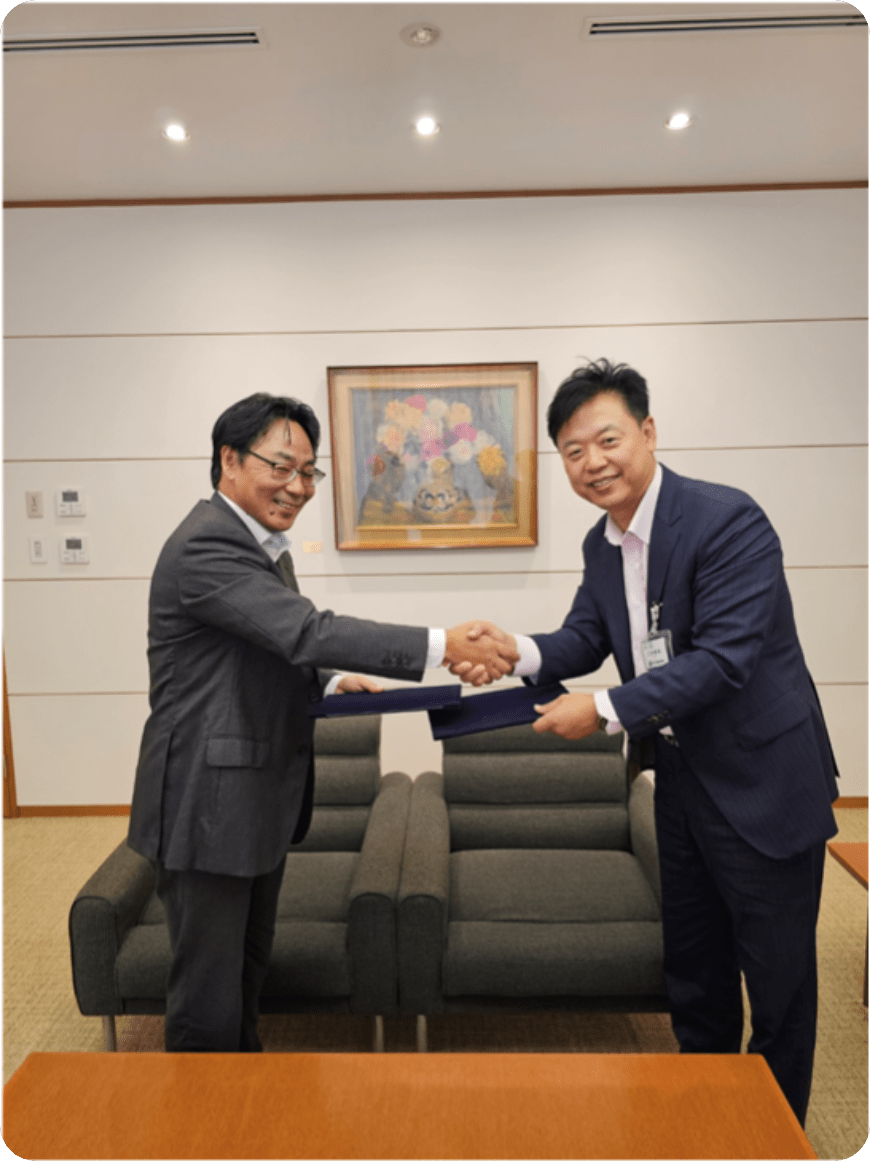
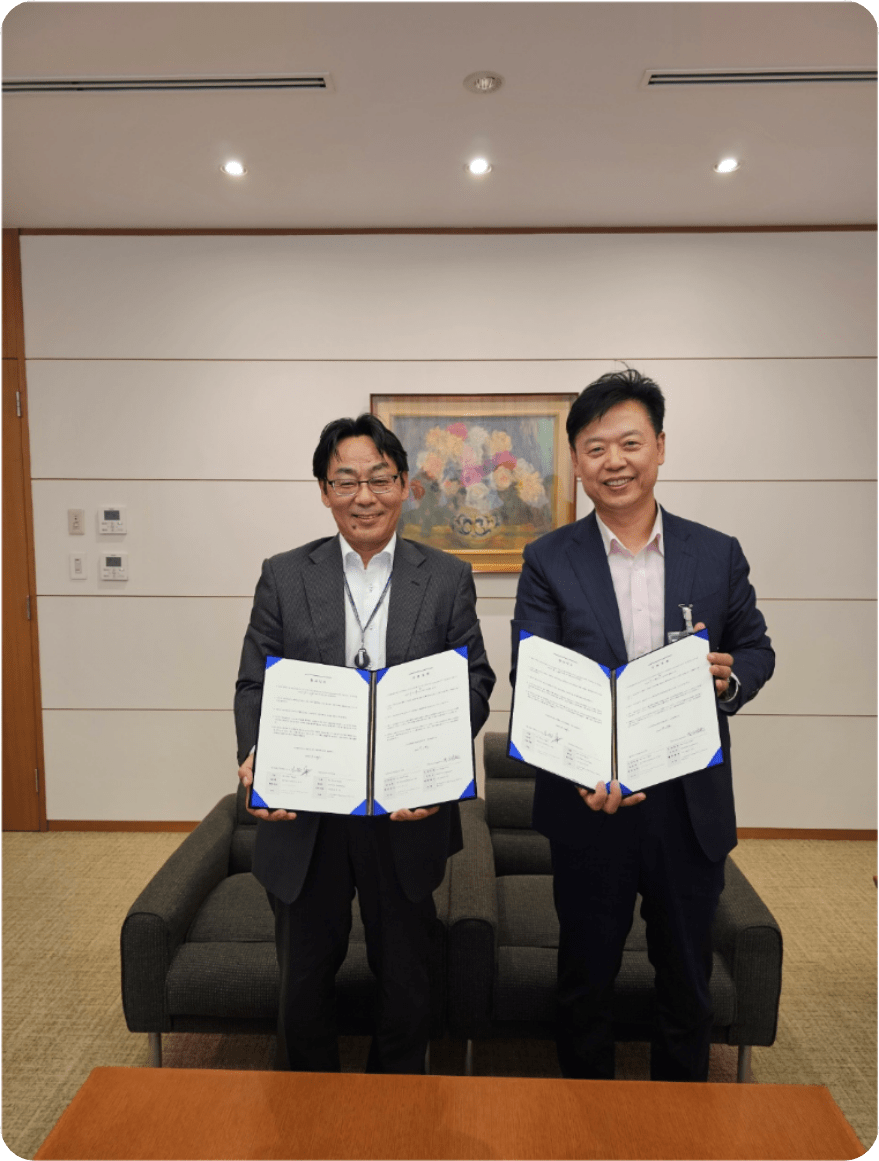
In 2024, both companies signed a Memorandum of Understanding (MOU) for mutual cooperation on the development and sales of dehumidification rotors.
2024 MOU Signing
Through this agreement between the two companies, CK Solution Co., Ltd. will further strengthen its position in both domestic and international dehumidification markets by ensuring a stable supply of world-class dehumidification rotors and pursuing joint development initiatives.
What is NICHIAS?
Nichias Corporation was founded in 1896 and is a globally recognized materials company with world-class technological expertise.
Active across a wide range of industries — including energy, plant engineering, semiconductors,
and secondary batteries — Nichias supplies CK Solution Co., Ltd. with dehumidification rotors in the AC-SG, EX-SG, DH, and MS-D models.
Applications
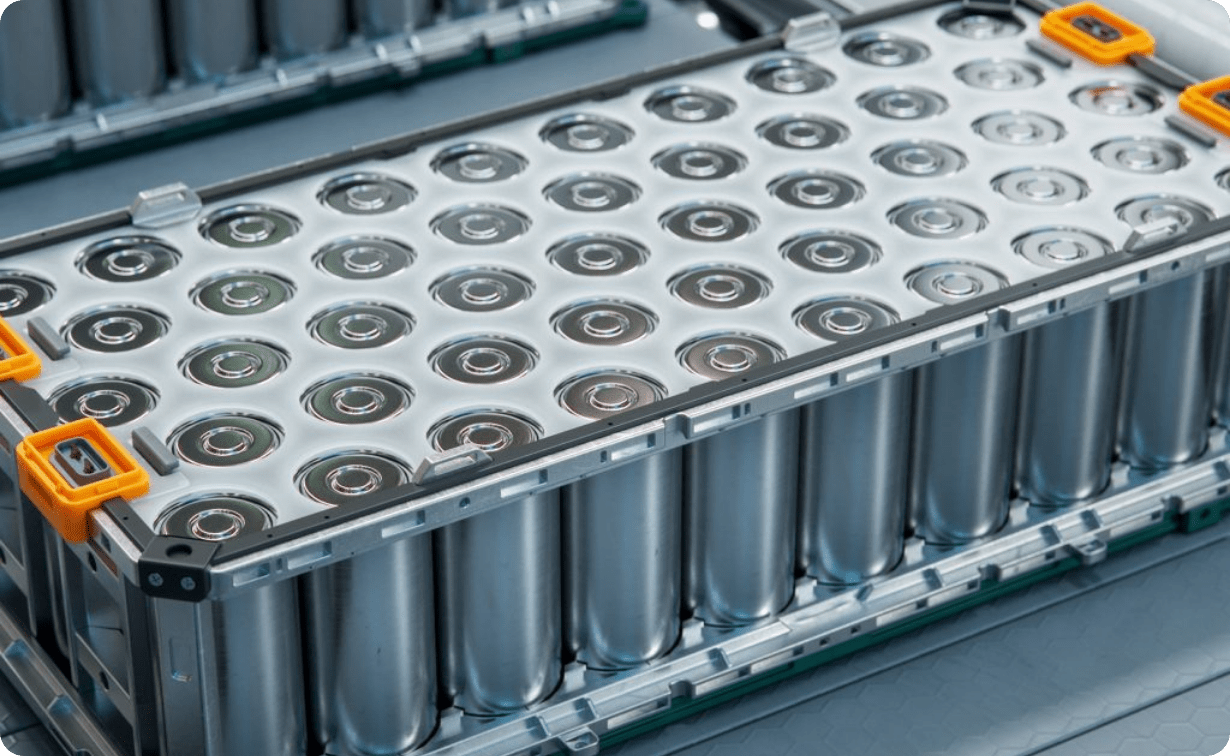
LiB
Plastics
Air Conditioning for Supermarkets

Pharmaceuticals
Cleanrooms
Dehumidification for Swimming Pools & Ice Rinks

Data Centers
Dry Rooms
Flood Damage Prevention, Underground / Rooftop Drying

Paint Booths (Automotive)
Building Air Conditioning
Dehumidifiers for Parking Lots & Event Spaces

Food Processing
Air Conditioning for Schools & Hospitals
Corrosion Prevention in Bridge Towers / Wind Turbine Towers
Nichias Product Features

High Air Volume Capacity
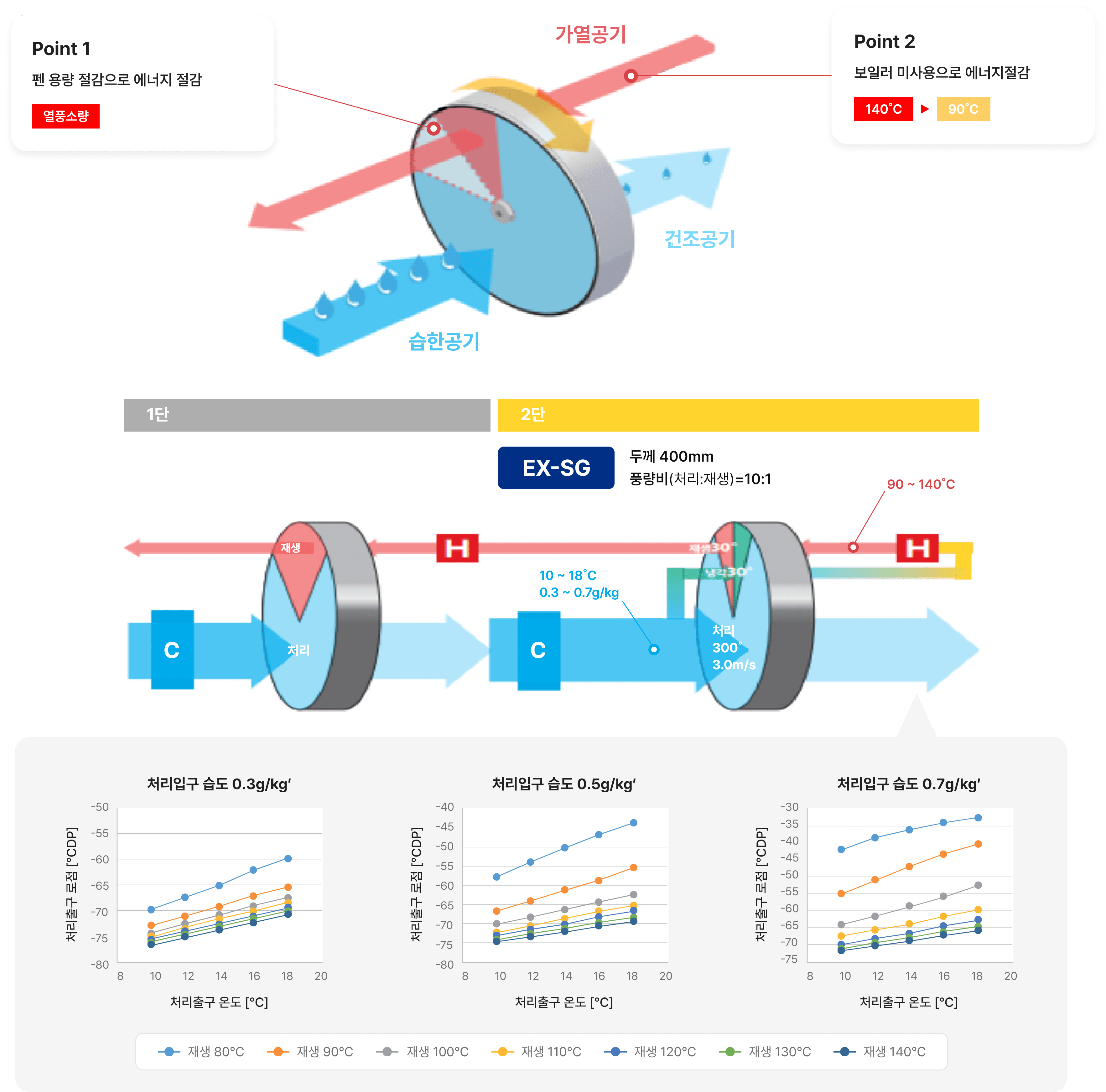
Thanks to the honeycomb structure, pressure loss (airflow resistance) is low, enabling dehumidification of large air volumes while reducing fan power consumption.

Effective Dehumidification Even at Low Temperatures
Compared to compressor-based systems, stable dehumidification performance is maintained even in low-temperature environments without any degradation.

Easy Maintenance
The rotor rotation mechanism has a simple structure, making maintenance straightforward and hassle-free.

Long Service Life
All materials used offer excellent heat and moisture resistance, resulting in an extended service life.
Product Line-Up
| AC-SG/EX-SG | MS-D | DH | |
|---|---|---|---|
|
Primary Applications |
Relatively high-humidity conditions such as lithium-ion battery plants, buildings, chemical, food, and pharmaceutical factories; Low dew point applications in semiconductor and LiB plants |
Plastic molding processes (Hopper Dryer) High-temperature air drying |
Low dew point applications in semiconductor and LiB plants |
|
Adsorbent |
Silica gel |
Hydrophilic zeolite |
Silica gel + Hydrophilic zeolite |
|
Features |
Large adsorption capacity, advantageous in high-humidity conditions; Low-temperature regeneration possible Dehumidification performance may decrease at high temperatures |
Stable adsorption in high-temperature, low-humidity air Smaller adsorption capacity, less suitable for high-humidity air Minimal performance degradation under recirculated air conditions |
Achieves ultra-low dew point dehumidification by using silica gel at the front stage and zeolite at the rear stage |
|
Max. Regeneration Temperatur |
140ºC |
180ºC |
180ºC |
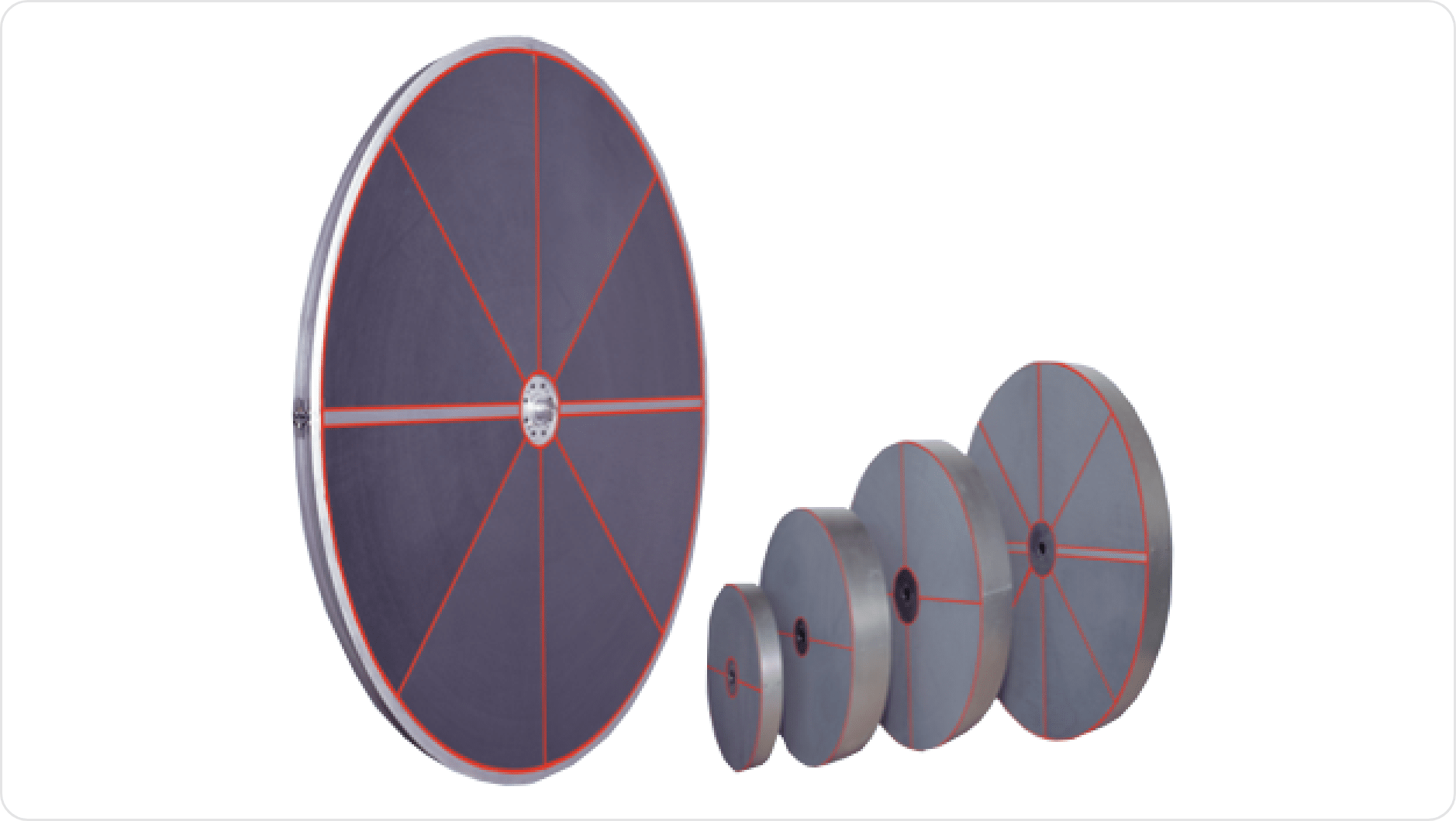
Overview
In recent years, moisture in the air has become a major cause of quality issues across a wide range of industries, including pharmaceuticals, food processing, chemicals, semiconductors, and lithium-ion batteries, making humidity control an absolute necessity.
Dehumidification methods for controlling and managing humidity include the desiccant dehumidification method, which uses dehumidifying materials, and cooling dehumidification, which lowers humidity through supercooling.
Nichias has long supplied the market with honeycomb rotors for desiccant dehumidification (hereinafter referred to as "dehumidification honeycomb rotors").
Structure
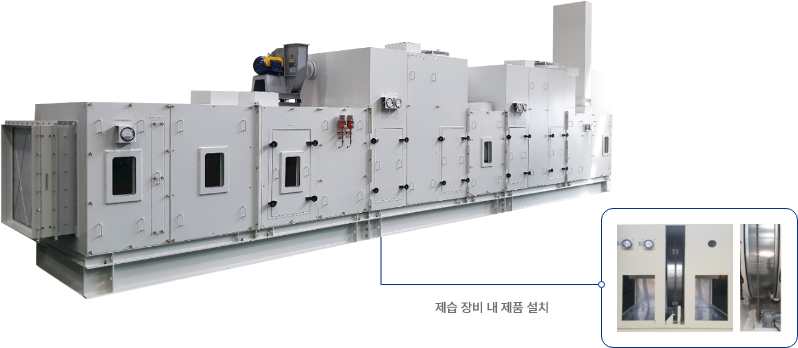
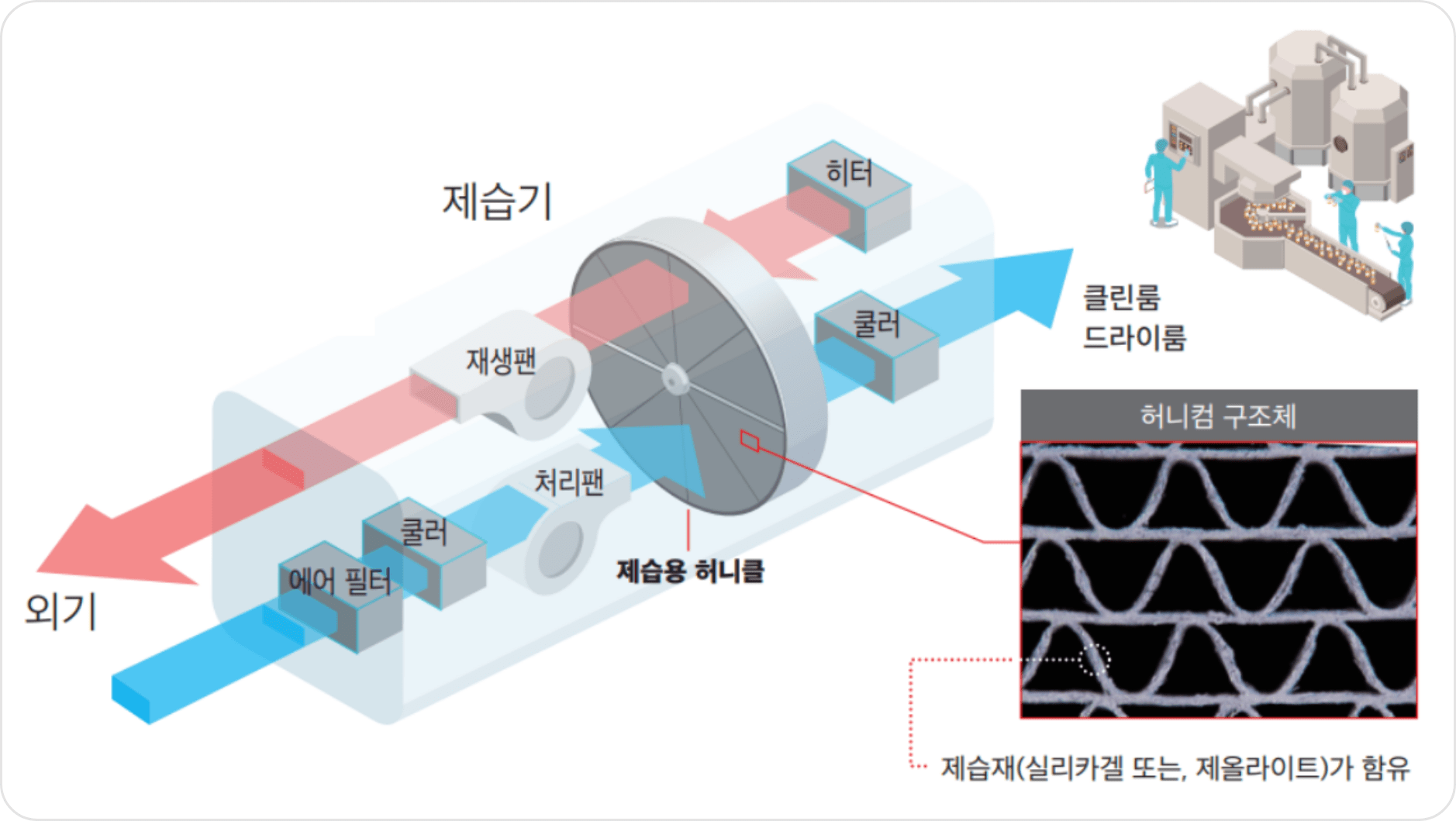
The dehumidification honeycomb rotor is a product in which a highly active hygroscopic material is impregnated into a honeycomb structure, reinforced with a metal frame, and formed into a rotor shape. When installed in a dehumidifier, it provides dehumidification functionality.
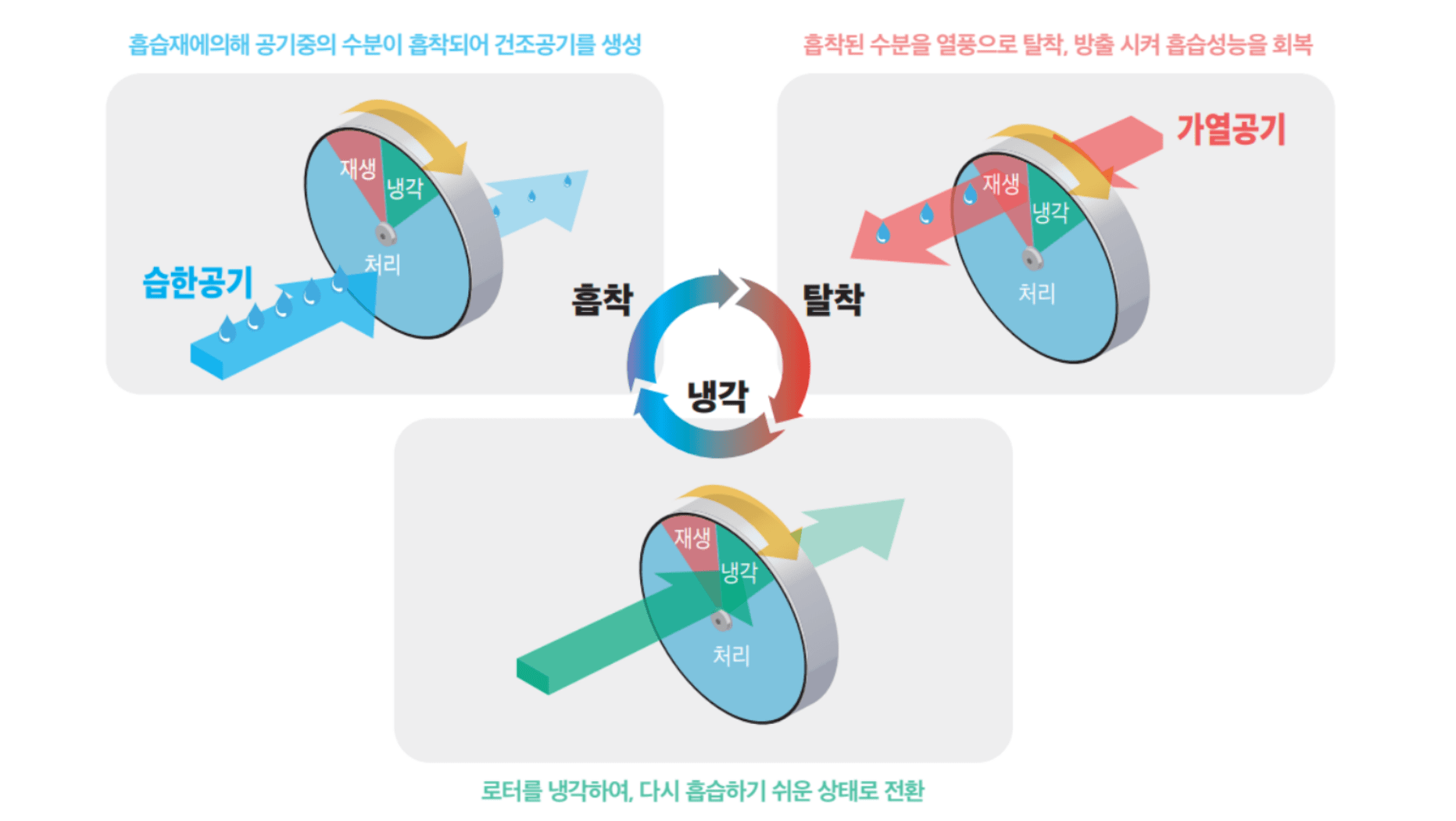
Operating Principle
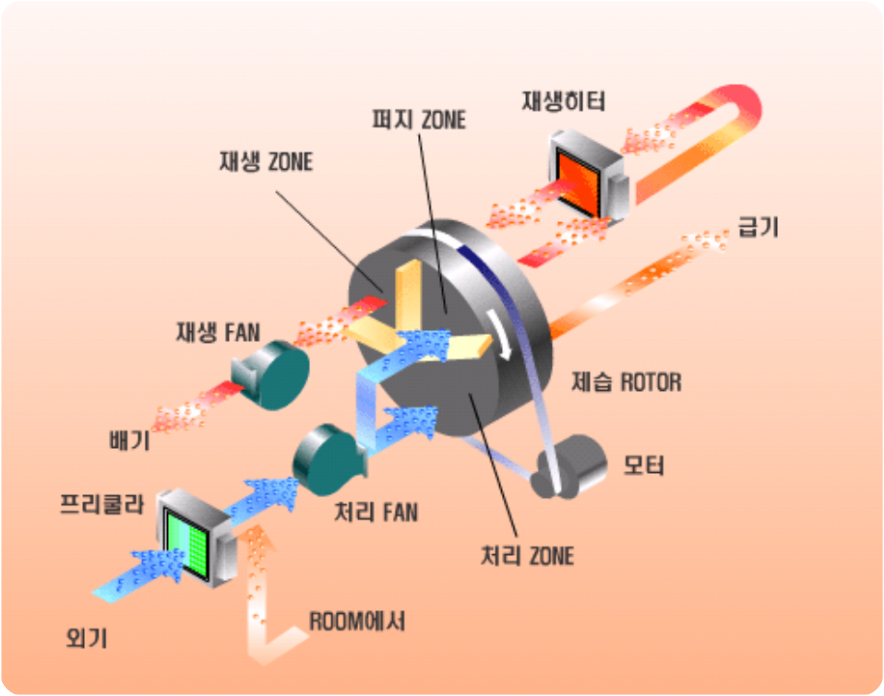
The dehumidification honeycomb rotor is used in a device divided into zones by a heat-resistant seal structure: (A) Process Zone + Regeneration Zone, or (B) Process Zone + Cooling Zone + Regeneration Zone.
By rotating the rotor at an optimal speed determined by air conditions, dehumidification (adsorption) and regeneration (desorption) are carried out continuously, enabling a steady supply of dry air.
Advantages